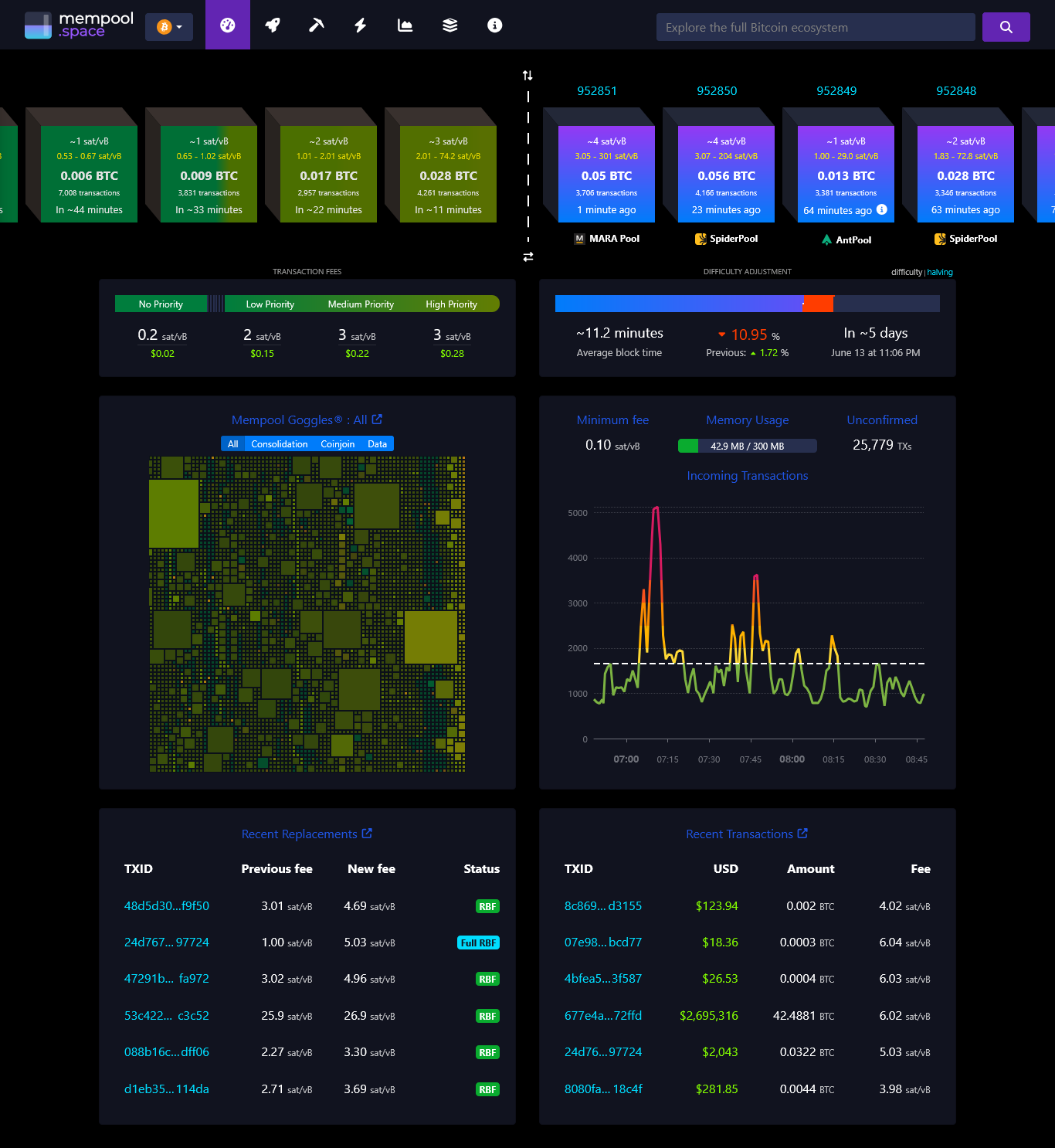
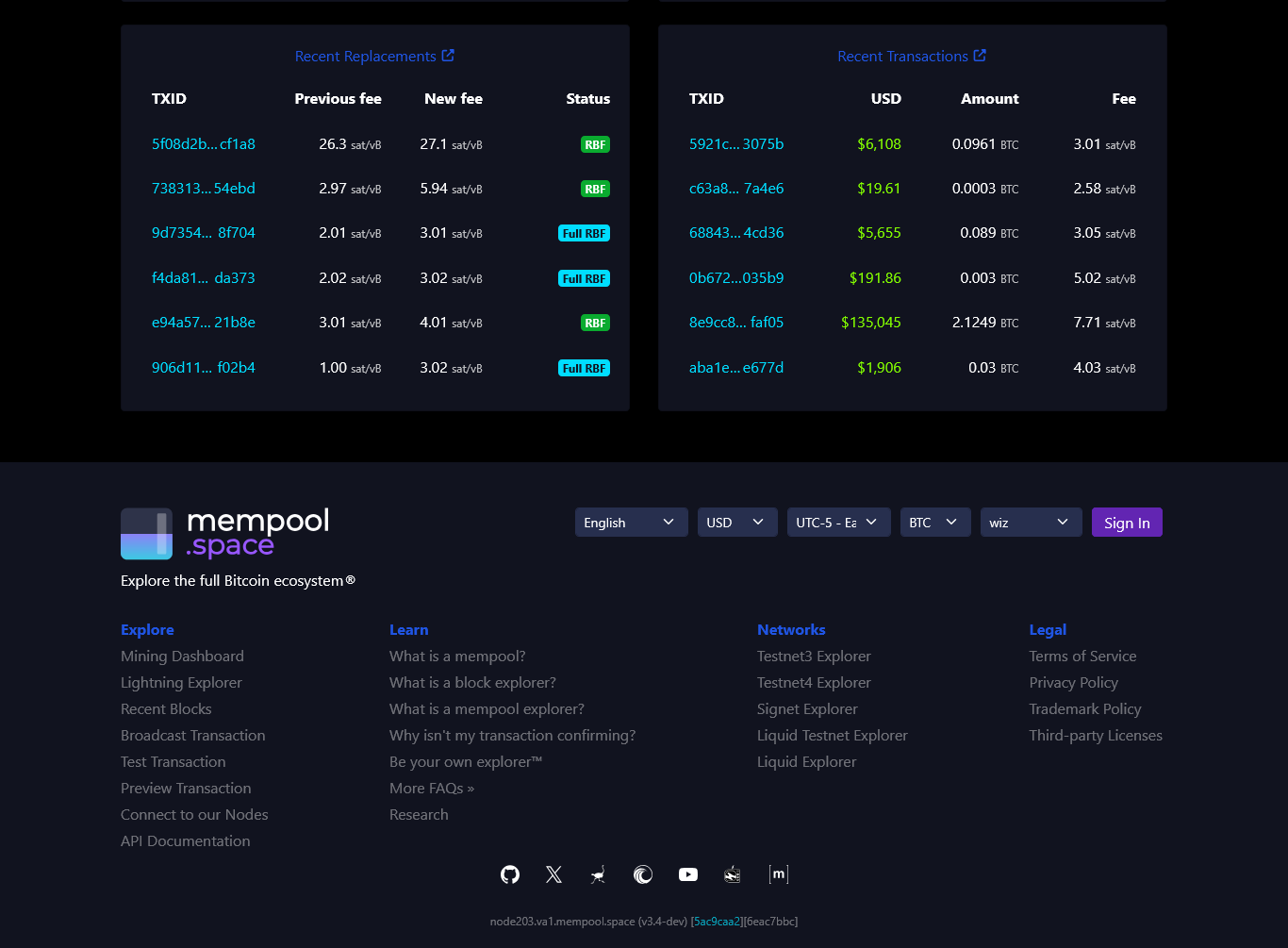
In blockchain networks, the term mempool (short for memory pool) refers to a temporary holding area where unconfirmed transactions wait before being added to a block. It plays a crucial role in how transactions are processed, prioritized, and eventually recorded on-chain.
Although the concept exists across many blockchain systems, it is most commonly discussed in relation to Bitcoin, where transaction demand, fee markets, and block space limitations make the mempool especially important.
What Is a Mempool?
The mempool is a collection of all valid but unconfirmed transactions that have been broadcast to a blockchain network but not yet included in a block by miners (in proof-of-work systems) or validators (in proof-of-stake systems).
When a user sends a cryptocurrency transaction, it does not immediately get added to the blockchain. Instead, it is first verified by nodes in the network and then placed in the mempool while waiting for inclusion in a block.
Each node in the network maintains its own version of the mempool. This means there is no single global mempool—rather, it is a distributed concept that varies slightly from node to node depending on what transactions each has received.
How a Transaction Enters the Mempool
To understand the mempool, it helps to follow the lifecycle of a transaction:
1. Transaction creation :>
A user creates a transaction using a wallet, specifying recipient address, amount, and fee.
2. Broadcasting :>
The transaction is broadcast to the peer-to-peer network.
3. Validation by nodes :>
Nodes verify basic rules:
:> Is the digital signature valid? :> Does the sender have enough funds?
:> Is the transaction format correct?
4. Entry into mempool :>
If valid, the transaction is stored in the mempool of each node.
5. Waiting for inclusion in a block :>
Miners select transactions from the mempool to include in the next block, typically prioritizing those with higher fees.
6. Confirmation on blockchain :>
Once included in a block, the transaction is removed from the mempool and considered confirmed.
Why the Mempool Exists
The mempool solves a critical problem in decentralized systems: coordination under limited block space.
Blockchains like Bitcoin have strict limits on how much data each block can contain. For example, Bitcoin blocks are roughly 1–4 MB in size depending on implementation details. However, thousands of transactions may be broadcast every few minutes.
The mempool acts as a buffer, allowing the network to:
1. Handle bursts of transaction activity 2. Prioritize transactions fairly based on fees
3. Maintain consensus across distributed nodes 4. Prevent network overload
// Without the mempool, transactions would have nowhere to wait, and the system would break under demand spikes.
Transaction Fees and Priority //
One of the most important functions of the mempool is fee prioritization.
When the mempool becomes crowded, miners (or validators) select transactions offering higher fees per byte of data. This creates a competitive marketplace where users can “bid” for faster confirmation.
Key concepts include:
. Fee rate (satoshis per byte or gas price in Ethereum-like systems)
. Transaction size (larger transactions cost more to include)
. Block space scarcity (limited capacity drives competition)
During periods of high demand, the mempool can become congested, causing fees to rise significantly. Users willing to pay higher fees get their transactions confirmed faster, while lower-fee transactions may wait longer.
Mempool Size and Network Congestion
The size of the mempool is often used as an indicator of network activity.
. Small mempool → low activity, fast confirmations, low fees
. Large mempool → high demand, slow confirmations, higher fees
When the mempool grows significantly, it means transactions are entering faster than they are being confirmed. This backlog can sometimes last minutes, hours, or even days in extreme cases.
# For example, during periods of high trading activity or market volatility, the mempool can swell dramatically, causing delays across the entire network.
How Miners Select Transactions
Miners are incentivized to maximize revenue. Since block space is limited, they prioritize transactions based on fee efficiency rather than arrival time.
Typically, miners:
1. Sort transactions by fee per byte 2. Select the highest-paying transactions first
3. Fill the block up to its maximum capacity 4. Include additional transactions if space allows
// This means that even if a transaction enters the mempool early, it may still be delayed if its fee is too low compared to newer transactions.
Mempool Differences Across Nodes
A key but often misunderstood aspect is that each node has its own mempool. This leads to slight differences in transaction visibility across the network.
:> Reasons for differences include:
1. Network latency (some nodes receive transactions earlier than others)
2. Different mempool size limits (nodes may discard low-fee transactions when full)
3. Policy differences (nodes may have slightly different rules for relaying transactions)
// Despite these differences, consensus is eventually reached because all valid transactions that get confirmed in a block are propagated across the network.
Mempool in Bitcoin vs Ethereum
In Bitcoin, the mempool is relatively straightforward: transactions wait to be included in blocks by miners, and fees are the main determinant of priority.
In Ethereum and similar smart contract platforms, the concept is more complex. Instead of just fees per byte, users pay “gas fees,” which reflect computational effort. The mempool also contains smart contract interactions, which may vary in complexity and execution cost.
However, the underlying principle remains the same: unconfirmed transactions wait in a queue until included in a block.
Mempool Visualization Tools
Many blockchain explorers provide real-time mempool visualizations. These tools show:
1. Number of unconfirmed transactions 2. Estimated confirmation times
3. Fee distribution 4. Network congestion levels
// These dashboards are useful for traders and users trying to decide optimal transaction fees.
Problems and Limitations
While the mempool is essential, it introduces several challenges:
1. Fee unpredictability :>
Users may overpay or underpay due to fluctuating congestion.
2. Transaction delays :>
Low-fee transactions can remain unconfirmed for long periods.
3. Memory constraints :>
Nodes cannot store unlimited transactions, so they may drop low-priority ones.
4. Privacy concerns :>
Since transactions propagate through the mempool before confirmation, there is a brief window where unconfirmed activity is visible to the network.
Future Improvements //
Researchers and developers continue to explore ways to improve mempool efficiency:
1. Better fee estimation algorithms 2. Layer-2 scaling solutions (e.g., Lightning Network for Bitcoin) 3. Transaction batching and aggregation 4. More efficient block space usage.
These improvements aim to reduce congestion and make transaction fees more predictable and fair.
Conclusion ://
The mempool is a critical but often invisible part of blockchain systems. It serves as the waiting room for transactions before they are confirmed, helping manage limited block space and prioritize network activity.
By understanding how the mempool works, users can make smarter decisions about transaction fees and timing, and better understand delays in confirmation.
Whether sending a simple transfer or interacting with complex smart contracts, every blockchain transaction passes through the mempool—making it one of the most important mechanisms in decentralized digital finance.

Drag & Drop Website Builder